
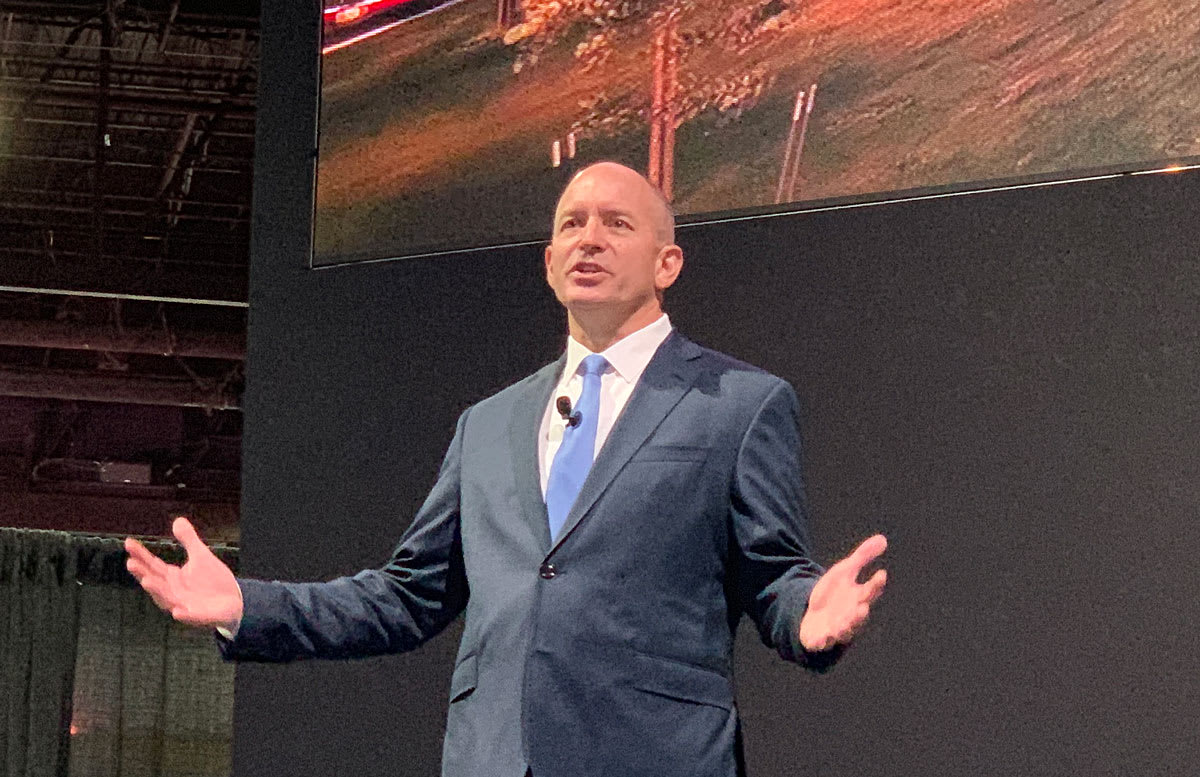
Roger Nielsen has witnessed numerous changes during his 35 years at Daimler Trucks North America. As he prepares for retirement, the soon-to-be former CEO shares his insights on the industry’s evolution and the challenges that lie ahead in an extensive interview.
Career Beginnings
Nielsen embarked on his journey at Daimler Trucks North America in 1986 as a manufacturing engineer for Freightliner, focusing on wiring harness testing. “I began as an engineer tasked with assembling systems to test new wiring harnesses,” he remarked during a Zoom interview on Feb. 19. “Prior to my arrival, the only testing method was to start the truck at the assembly line’s end; if the lights lit up, the harness was deemed functional.”
Looking Back
Nielsen still feels confident diagnosing electrical issues in older Freightliner models, stating, “I can still recall all the circuit numbers.” He reflected on transformative moments in the 1980s, like the shift from pneumatic to electric wipers. As he prepares to retire on April 30, having spent the last four years as president and CEO, he acknowledges that the “new technology” landscape has vastly evolved during his tenure.
Innovations Under Leadership
During Nielsen’s leadership, DTNA launched customer trials for battery-electric trucks such as the Freightliner eCascadia and eM2, in addition to the Thomas Built Buses Jouley electric school bus. He also revitalized the Western Star product lineup and progressed the vocational truck business, with autonomous vehicles on the horizon.
Reasons for Transition
Nielsen shared insights on his decision to retire now, stating, “I wish I were 25 again because this is a thrilling time for the industry. However, transitioning has been part of my plan since I assumed the CEO role.” He plans to pursue his passions in battery electric and autonomous technology and emphasizes his commitment to the trucking industry moving forward.
Challenges Ahead for Successor
John O’Leary, Nielsen’s successor, will face significant challenges including high demand exceeding supply chain capabilities and the successful launch of the new Western Star 49X. Additionally, he is tasked with leading battery-electric vehicle production, ensuring that costs are competitive with diesel, which remains a critical goal going forward.
Addressing Industry Concerns
Nielsen also discussed the future of autonomous vehicle regulation, voicing that the industry still has considerable ground to cover before fully automated driving becomes a reality. He emphasized the need for smart infrastructure and an evolutionary approach to regulations as the technology develops.
Commitment to Social Issues
Lastly, Nielsen highlighted DTNA’s commitment to social responsibility. He established Dr. King’s birthday as a national day of service for employees, noting its transformative impact on company culture. He expressed confidence that these initiatives will continue under O’Leary’s leadership as the company aims to enhance community engagement and customer relations.
