


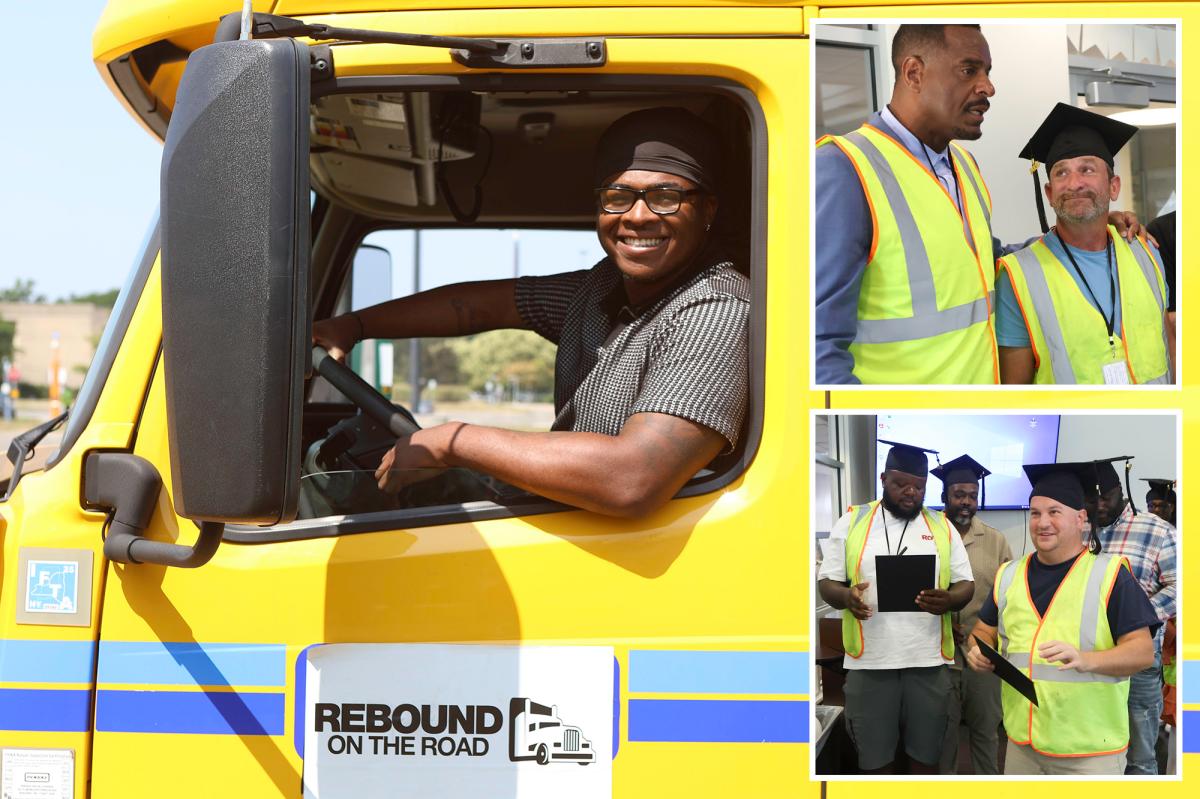
From bright lights to headlights.
Former St. John’s star and NBA legend Jayson Williams is at the helm of a rehabilitation program in Nassau County that has successfully transformed nearly a dozen formerly incarcerated individuals into truck drivers.
“When I received my diploma up there, I almost cried… I worked hard for this moment,” shared Timmy Jones, 39, with The Post following Monday’s graduation at Nassau Community College.
Jones, who spent over 15 years in prison for manslaughter, was part of the inaugural Long Island class of Rebound on the Road.
“When you come home from a long prison sentence, many family members won’t give you another shot, so this means a lot,” he stated.
Accelerating Progress
The eight-week program is the brainchild of the former New Jersey Net, who himself faced 27 months of incarceration after the accidental shooting of his limo driver, Costas Christofi, in 2002.
Williams, known for his fierce rebounding skills during his NBA career, is channeling his passion into this initiative.
“I’m here every day—at least seven days a week. Sometimes Sundays will require ten hours, while other days range from 13 to 14 hours,” he explained, expressing his commitment to helping others since his release.
“I love it. You can see the positive impact it has… and we produce great outcomes.”
Life Lessons on the Road
In addition to driving skills, Williams emphasizes life lessons and mental health support for his students, preparing them for what he refers to as an “another chance” instead of just a second chance.
Students who don’t greet each other properly get sent home, and Williams has introduced boxing gloves, referred to as a “suggestion box,” to let participants express grievances.
He also organizes recreational activities like jet skiing, encourages prayer, and even requires skydiving for those who can, fostering personal growth beyond their comfort zones.
“I’ve wanted to skydive for a while, so I’m really looking forward to that,” said recent graduate Clayrone Garner, who has yet to take the plunge.
“It pushes you towards new goals.”
A Community of Growth
Jones remarked on the work ethic of his peers, stating that they’ve been dedicated from sunrise to sunset since the program began, bonding through barbeques and a vegetable garden they cultivate on the campus.
Garner, who also served time for a violent crime, noted that their garden, featuring watermelon and squash, symbolizes personal growth and the importance of nurturing oneself.
“The garden represents the value of life… the more knowledge and good we bring into our lives, the better we become,” he elaborated.
“It’s like a home away from home,” Garner added, highlighting the supportive environment the program offers.
Investing in New Beginnings
Williams attributes the program’s success to the willingness of students to embrace positive change.
“It only works because of their energy,” he stated. “I’ve been part of programs where people act like they’re doing you a favor. Here, they’re eager and motivated.”
Nassau County Executive Bruce Blakeman recognized the program’s potential for change when Williams first proposed it a few months ago.
“We believe in law and order, which is why we’re the safest county in America. However, merely locking people up isn’t the solution,” Blakeman emphasized.
“We need to help people reinvent themselves as productive members of society.”
Nassau initially invested $1 million into Rebound on the Road and has recently committed an additional $300,000 after witnessing the initial class’s success.
“This ultimately makes us safer, as it prevents individuals from returning to crime,” Blakeman stated. “It reduces recidivism and instills hope.”
For Williams, this program represents a fulfilling lifelong career on Long Island.
“If St. John’s called me to coach, I’d decline,” he said. “I want to help people improve their lives, not just score more points.”
