
This week, commercial vehicle drivers who do not meet the English language proficiency (ELP) standards will face being placed out-of-service.
Failure to Meet English Proficiency Standards Leads to Out-of-Service Status
Beginning Wednesday, June 25, 2025, drivers who fail to comply with federal regulations requiring ELP will be considered out-of-service. This directive was outlined in guidance from the Commercial Vehicle Safety Alliance (CVSA) issued in May.
NEWS: @SecDuffy has announced new guidelines to enhance enforcement of English proficiency for commercial truckers.
Under @POTUS’ leadership, we’re improving highway safety by ensuring every driver is qualified and proficient in English—our national language.
Starting June 25,… pic.twitter.com/LmvCDaflMN
— U.S. Department of Transportation (@USDOT) May 20, 2025
The CVSA has added “English Proficiency” to its North American Standard Out-of-Service Criteria following a White House Executive Order (EO) that mandates stricter enforcement of federal English-language regulations for truck drivers. This also led to the repeal of a 2016 Federal Motor Carrier Safety Administration (FMCSA) memo that had previously prevented law enforcement from placing drivers out-of-service for ELP violations.
Methods for Assessing English Language Proficiency
Starting June 25, drivers must demonstrate adequate English proficiency to avoid being out-of-service. This includes the ability to communicate with the public, comprehend highway traffic signs and signals, respond to inquiries, and complete reports. The FMCSA has outlined a two-step assessment for law enforcement to evaluate a driver’s English proficiency during inspections:
- Driver Interview
- Highway Traffic Sign Recognition Assessment
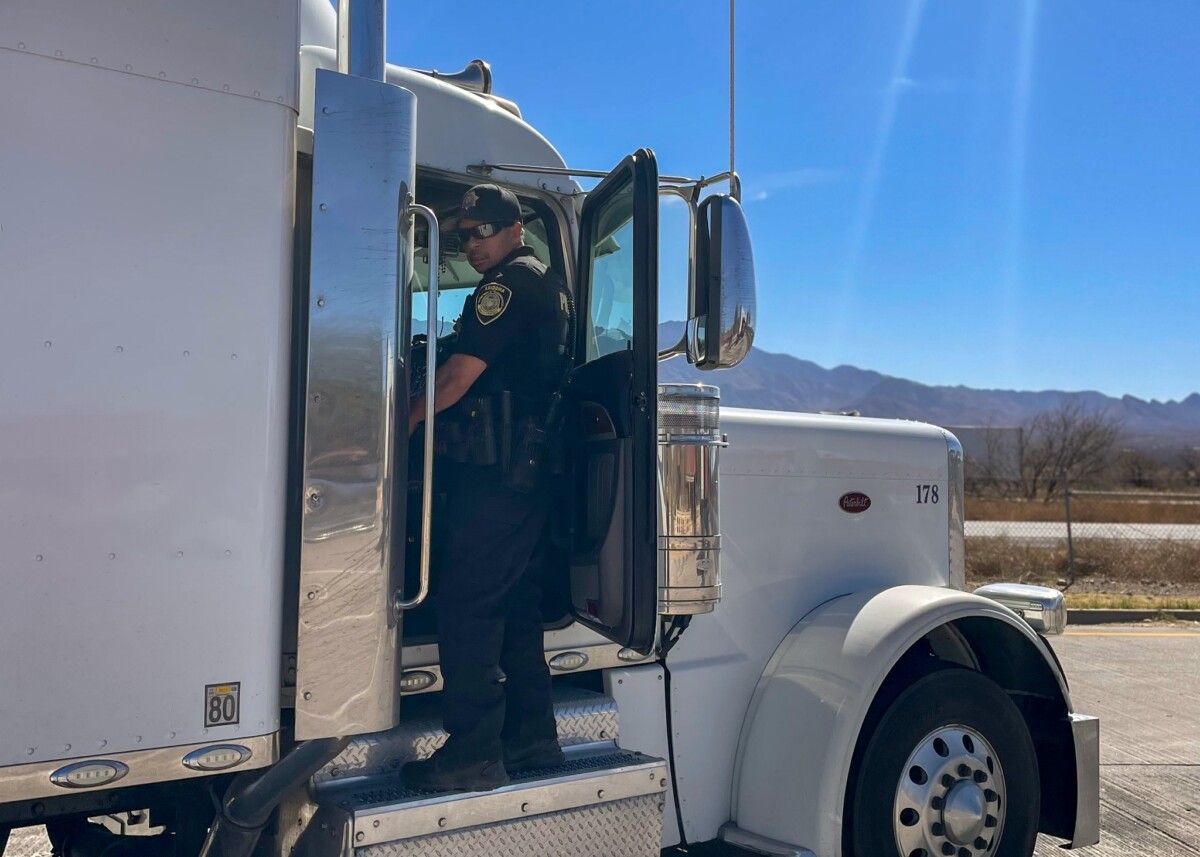
The FMCSA advises that all roadside inspections should commence in English. If it appears a driver struggles to understand initial instructions, an ELP assessment will be conducted to determine compliance with 49 CFR § 391.11(b)(2).
In the first step, inspectors will evaluate the driver’s ability to comprehend and respond to official inquiries in English. Communication aids like interpreters and translation apps should not be utilized in this process as they might conceal the driver’s lack of proficiency.
If the inspector finds the driver unable to communicate effectively in English, they will cite the driver for a violation without moving to the second assessment step. For the second step, inspectors will assess the driver’s understanding of highway traffic signs in English, guided by regulations set by the Federal Highway Administration’s Manual on Uniform Traffic Control Devices.
Inspectors are instructed to document the violation evidence, including the driver’s responses, and to place the driver out-of-service if warranted. Additionally, they may initiate actions to disqualify the driver from operating commercial vehicles in interstate commerce. However, leniency will be offered to drivers in commercial zones near the U.S.-Mexico border; these drivers will be cited for ELP violations but will not be placed out-of-service or disqualified.
