


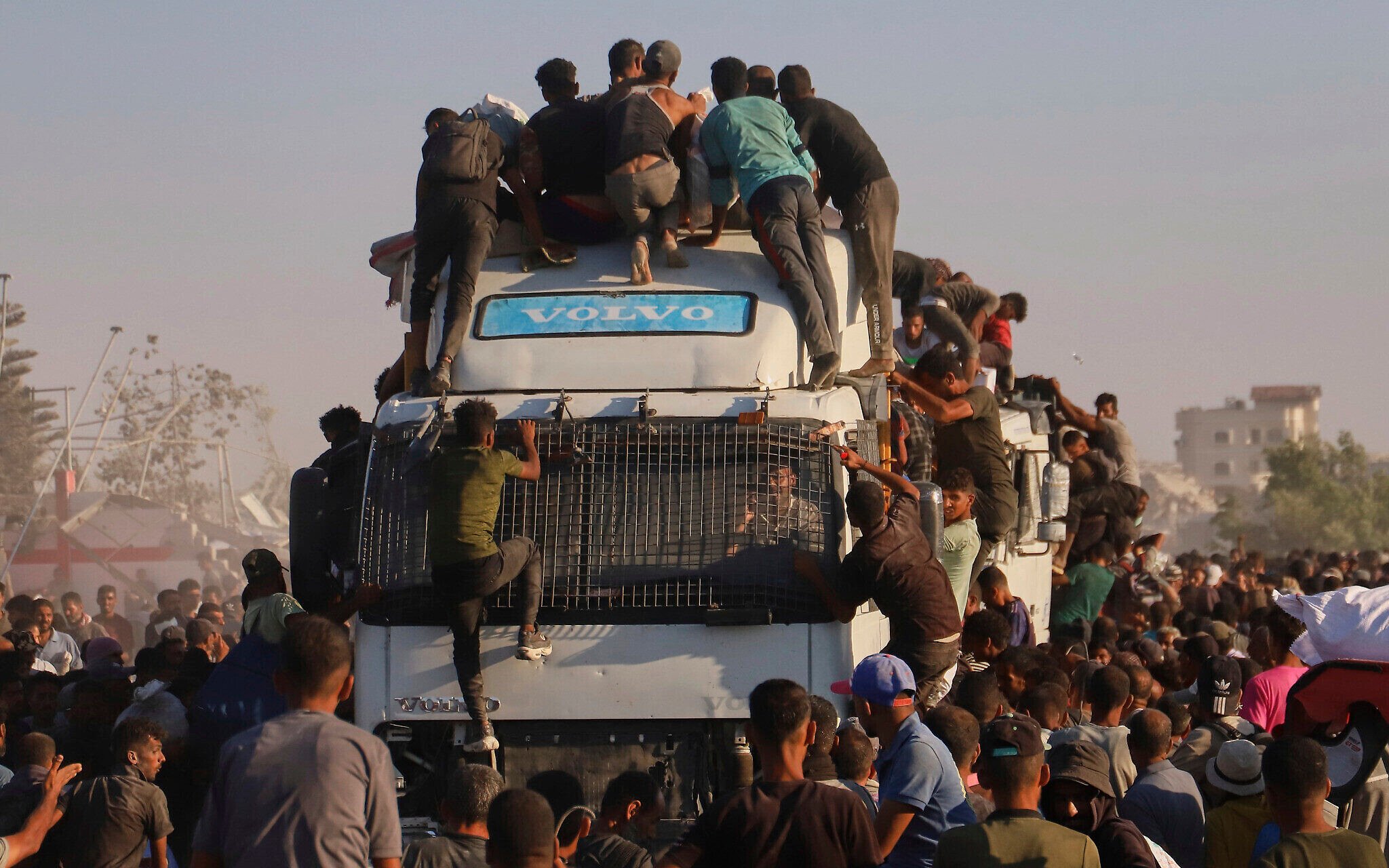
Challenges Faced by Humanitarian Drivers in Gaza
JERUSALEM (VINnews) — In a revealing interview with the Daily Wire, Gazan truck drivers delivering humanitarian supplies from the Kerem Shalom crossing shared their experiences of mistreatment while attempting to provide aid to those in need.
Reporter Kassy Akiva conducted interviews with the drivers, utilizing a translator and concealing their identities for safety. They expressed feeling demonized as they risk their lives, often facing attacks from mobs and armed looters during their missions.
NEW: The Daily Wire went inside Gaza, where we spoke with humanitarian truck drivers who described being attacked and having their trucks looted.
“They break our doors to hit the driver.”
WATCH: pic.twitter.com/8bhFc9yH2o
— Kassy Akiva (@KassyAkiva) August 26, 2025
One driver recounted that mobs use tools to force their truck doors open and assault them. Another added the situation is daunting, likening it to having “a thousand” people obstructing his view by climbing onto the windshield. He also pointed to a nearby truck that had been shot at during the interview.
“People make us aid drivers feel responsible for the war, hunger in Gaza, and accuse us of theft,” lamented one driver. “We have footage showing that it’s not us causing the issues.” The drivers’ remarks come amid alarming reports from the UN indicating that nearly all humanitarian aid intended for Gaza is being stolen before delivery. Of the 1,123 trucks dispatched in July, only 73 reached their destinations.
“There’s no hope left for Gaza,” one driver stated. “No shelter, no water, no food! Much of the aid arrives damaged or is sold off by thieves.” The drivers noted the precariousness they face both while trying to deliver aid and leaving densely populated areas. Many trucks were seen reinforced with metal cages and barbed wire for added protection.
The drivers, who previously worked in Israel and reported better treatment, expressed hopes for a future involving the exchange of Israeli hostages for Palestinian prisoners, longing for an end to the conflict and a change of regime.
