


In December, both new and used commercial truck prices experienced a decline as the seasonal trends typical of year-end returned to the market, following a year impacted by tariffs.
Commercial truck pricing results for 2025 were varied. While prices for new and used trucks decreased compared to November, used and certified pre-owned truck prices improved when compared to the end of 2024, as reflected in Equipment Finance News’ Average Truck Price Trends dataset. As of December 15, the average price for new commercial trucks was $142,617, showing a decrease of 28.1% month-over-month and 23.4% year-over-year according to EFN statistics.
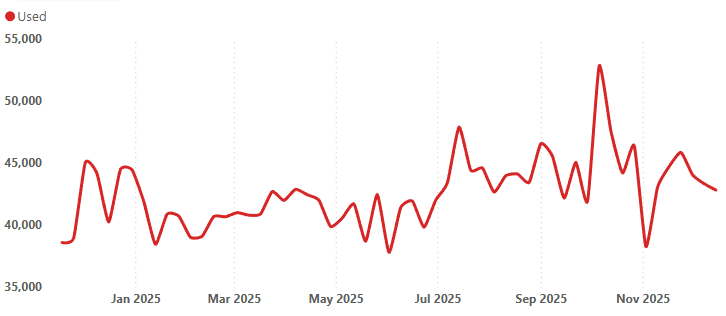
In contrast, the average price of certified pre-owned trucks rose by 17.7% month-over-month and 18.52% year-over-year to reach $99,950, per EFN data. The average used truck price experienced a month-over-month decline of 4.3% but increased by 6.4% year-over-year, settling at $42,794 according to data dating back to November 2024.
Shifting Conditions
Enhanced truck activity is also a sign of normalized seasonal patterns, with current transactions reflecting an improvement in values, mainly due to last year’s inventory issues. Jim Ryan, Equipment Lease and Finance Manager at Sandhills Global, shared insights with EFN.
“This is in line with our expectations for this time of year. In previous months, we didn’t see this. Now there’s activity in the auction market that usually wouldn’t be seen, particularly with late model vehicles.” — Sandhills Global Equipment Lease and Finance Manager Jim Ryan
While tariffs remain elevated compared to earlier in the year, the overall uncertainty seems to be stabilizing. Cedric Chehab, chief economist at BMI, noted during a webinar on December 11 that this enables businesses to plan with more clarity due to the stabilization of effective tariff rates after previous fluctuations.
“The primary issue for most of 2025, particularly from February to about August, was that companies lacked clear understanding of tariff outcomes, leading to significant uncertainty and hesitation in decision-making,” he explained. “Now, with better information available, businesses are more prepared to act.”
For more exclusive industry data, check it out here.
