
U.S. Representative Julia Brownley has put forth a bill in the House of Representatives aimed at regulating truck leasing programs that are perceived to take advantage of owner-operator drivers.
Brownley, a Democrat from California, highlighted in a press release that “a significant number of drivers find themselves burdened by overwhelming debt, receiving unfair wages, and are unable to truly own their trucks.”
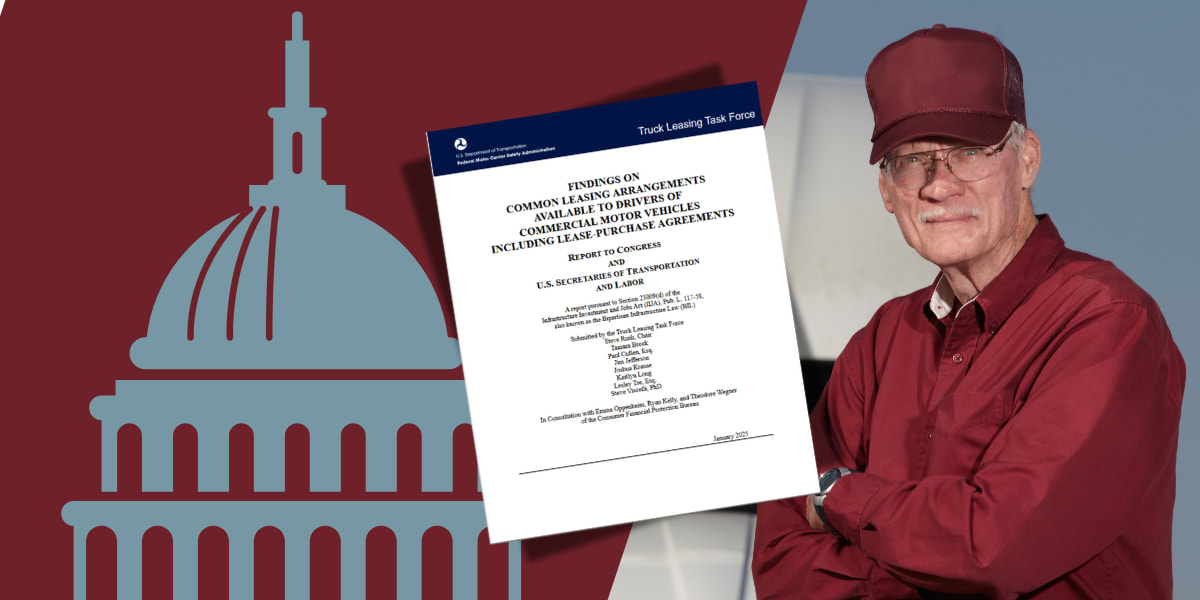
The Predatory Truck Leasing Prevention Act (H.R. 5423) seeks to implement suggestions from the Truck Leasing Task Force, a group formed by the Federal Motor Carrier Safety Administration under the Biden administration to examine motor carrier lease-purchase agreements with drivers.
This task force released a report in January recommending Congress either outlaw these programs or place stricter regulations on them, describing them as “irreparably flawed instruments of fraud and driver exploitation.”
Issues with Lease-Purchase Programs
According to Rep. Brownley’s announcement, while standard lease agreements can enable truckers to function as independent small businesses, many lease-purchase or “lease-to-own” contracts are designed to exploit drivers.
In these arrangements, a motor carrier retains ownership of the truck while leasing it to a driver, who makes payments in the hopes of eventually owning the vehicle and is required to operate it solely for that motor carrier. Often, the lessor and the motor carrier are indistinguishable.
Firms providing these contracts frequently lure drivers with false assurances of fair pay, future ownership, and freedom from typical employer-employee regulations.
“Although these agreements claim to enable drivers to become full-fledged owner-operators at the lease’s end, this rarely occurs. Instead, drivers typically receive minimal compensation and face restrictions set by the motor carrier that hinder their chances of actually owning the truck,” Brownley explained. “Drivers lack the autonomy to pursue better pay or more stable employment with other carriers.”
Details of Brownley’s Legislation
Brownley’s concise bill, spanning just three pages, would mandate the U.S. Department of Transportation to develop new regulations that prohibit exploitative commercial motor vehicle lease-purchase agreements by motor carriers. The department is expected to do this within a year of the bill’s passage.
The bill defines a “lease-purchase agreement” as a financial arrangement where a driver leases a commercial vehicle from a motor carrier (or an associated firm) to transport freight while being contracted separately to drive for the same carrier.
The legislation further clarifies a “predatory commercial motor vehicle lease-purchase agreement program” as the relationship framework between motor carriers and drivers—including lease agreements and the operational practices that govern them—deeming those that exploit drivers and prevent them from accruing equity or force them to relinquish accrued equity as predatory.
Considering Alternatives to a Ban
The Truck Leasing Task Force suggested that if Congress opts not to implement an outright ban on these predatory programs, it should allocate funds to enhance regulation and oversight of truck leasing through various federal agencies. However, there is uncertainty regarding the willingness to pursue such actions in the current deregulatory climate, especially given the Consumer Financial Protection Bureau’s weakened state under previous administrations.
Support from Driver Organizations
The Predatory Truck Leasing Prevention Act has garnered endorsement from the Owner-Operator Independent Drivers Association and the Teamsters union, both having representatives on the Truck Leasing Task Force. OOIDA President Todd Spencer remarked that these “predatory lease-purchase schemes have financially drained truck drivers for decades,” adding, “They promise ownership but ultimately leave drivers financially devastated.” Teamsters General President Sean M. O’Brien echoed this sentiment, stating, “Predatory truck leasing arrangements prey on diligent individuals seeking careers in trucking, ultimately driving them towards financial disaster.”
