
National Truck Equipment Association’s New Guidelines
The National Truck Equipment Association has published guidelines aimed at managing costs effectively by accurately specifying parts for new work trucks.
Comprehensive Specifications
The guidelines recommend that specifications should encompass a wide range of components, including frames, suspensions, engines, transmissions, brakes, lights, power takeoffs, tires, and specialized equipment. Robert Johnson, a leading consultant at Fleet Consulting and Design Services in Jefferson, Md., states, “Too often, fleets operate on a guess.”
Five Key Rules for Specifying Vehicles
Johnson, a former fleet manager, outlines five essential rules to optimize a fleet’s return on investment when specifying commercial vehicles:
- Create Written Specifications: Formal specifications should cover full vehicle applications (including modifications) to ensure that consistent components are installed across all company vehicles. Written specs help prevent ordering errors and streamline future vehicle acquisitions.
- Standardize Components: Standardization guarantees uniformity in vehicles regardless of which dealership or upfitter is involved. This approach reduces the variety of parts the maintenance department needs to stock, lowering training requirements for maintenance staff and ensuring efficiency.
- Avoid Automatic Under- or Over-Specifying: While trying to minimize upfront costs, some fleet managers might specify lower-grade components, risking performance issues and higher maintenance costs. Conversely, over-specifying with overly heavy-duty components can lead to unnecessary expenses and reduced payload capacity.
- Identify Vehicle Requirements Early: Systematically determine vehicle needs based on the specific job tasks. This involves evaluating the basic requirements as well as any additional features that can enhance productivity and operator comfort.
- Evaluate Life Cycle Costs: Selecting an optimized vehicle can ensure the lowest total ownership cost throughout its life. Key factors to consider include initial price, long-term operating and maintenance expenses, productivity, and resale value. A thorough after-tax net present value analysis can provide insights into cost-benefit evaluations.
Importance of Component Knowledge
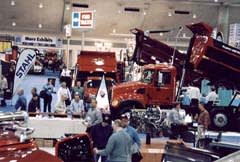
Johnson emphasizes that it is crucial for fleet managers to educate themselves about the various components that contribute to their work trucks, enabling them to make well-informed purchasing choices. Attending events like The Work Truck Show is a worthwhile opportunity for gaining insights into components and their suppliers.
Upcoming Session
Johnson will also be leading a technical session titled “Component Spec’ing for Optimum Vehicle Life-Cycle Costing” on March 3, 2005, at The Work Truck Show 2005 in Indianapolis, Indiana.
