
Long-haul trucking is not only a mentally taxing occupation but also one of the most precarious lifestyles in contemporary America.
Almost 70% of truck drivers are overweight, and their average life expectancy lags 16 years behind the national norm.
Popular fitness YouTuber Will Tennyson sought to delve into this demanding world by spending two arduous days on the road with seasoned driver Mike and his wife Becca to grasp the dangers associated with the profession.
The insights he gained were more alarming than he had expected.
Starting the Journey at 4 AM
Tennyson’s voyage commenced in Seattle when Mike picked him up before dawn. The itinerary was to travel from Washington to Boise, Idaho, a journey taking roughly 10 hours.
Mike’s wife Becca had taken on the role of co-driver after previous members had departed. Although she had been trucking for only a few months, the couple had already adjusted to life on the road.
The truck had transformed into their home, complete with bunk beds, their dog Tucker, and oddly, a set of dumbbells that rarely got used.
“Before I started truck driving, I was about 100 pounds lighter. I used to work out frequently. Now, that’s all faded away.”
Mike’s admission captured the essence of their reality. After driving around 2.5 million miles over 11 years, the damage to his health was unmistakable.
Addressing the Overlooked Health Crisis
Tennyson arrived with some stark data. Truck drivers are at a heightened risk for:
- Obesity and type 2 diabetes
- Heart issues and high blood pressure
- Sleep apnea and persistent back pain
- Mental health challenges and substance abuse
- Blood clots due to prolonged sitting
When asked whether they were aware that trucking was labeled the world’s unhealthiest job, Mike and Becca nodded without hesitation.
“Yeah, that aligns with what we’ve experienced.”
Their casual acknowledgment of the risks indicated a troubling reality: they had grown desensitized to the dangers.
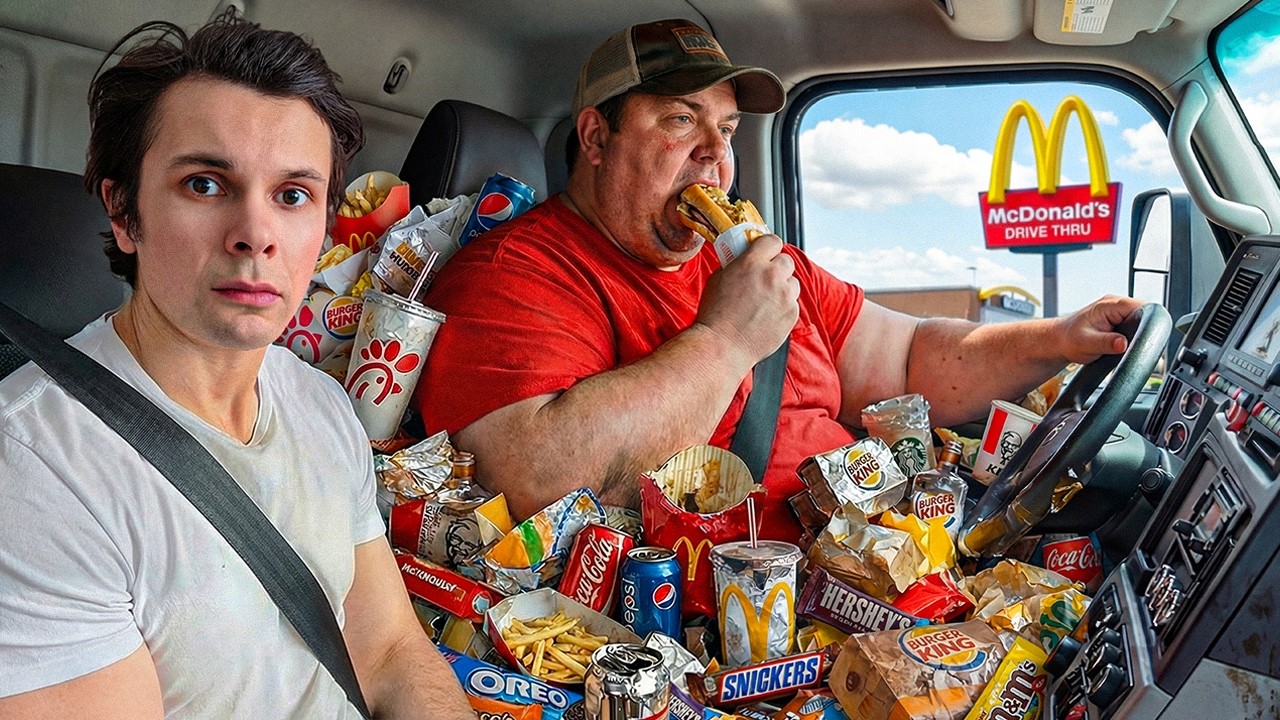
Truck Stops: A Nutritional Nightmare
Following four hours on the road, the group stopped at Jubitz in Portland, billed as “the classiest truck stop in America.”
Inside, Tennyson found walls lined with junk food, microwaved meals, and exorbitantly priced fresh produce—$4.99 for a small container of pineapple.
The eatery offered breakfast pizza alongside regular pizza. Mike opted for French donuts and gingerbread accompanied by an energy drink.
“Water keeps you alive but doesn’t make you feel alive. I prefer to feel alive.”
Tennyson ordered a veggie omelette laden with cheddar cheese, while Mike indulged in a waffle smothered in whipped cream.
They shared a “bulldog pizza” from Moe’s Deli at 9 AM, as Mike noted, time becomes irrelevant on the road.
The Snack Attack Epidemic
Back on the highway, Tennyson uncovered how boredom impacts the trucking diet. Shortly after breakfast, he dove into his snacks—donuts, fritters, and more.
Mike joined him, and they informally agreed that when the truck is in motion, calories don’t count.
The next truck stop mirrored the first: lacking protein options and fresh vegetables capable of surviving the road conditions.
A half bear claw contained 290 calories.
Navigating Dead Man’s Pass and Mental Wellness
As night fell, the crew approached Dead Man’s Pass, infamous for its steep inclines and treacherous nature. It was Becca’s first time handling this route, but she managed it without a hitch.
However, the physical ordeal was nothing compared to the mental strain Tennyson observed. Mike and Becca spent 26 days a month on the road, allowing just four days of freedom.
“Being away makes relationships nearly impossible to maintain.”
This isolation leads to conditions favoring depression; studies show 22% of U.S. truck drivers report being diagnosed with depression.
Lack of social interaction, missed family functions, strained relationships, and poor nutrition create what Mike described as “a perfect storm for loneliness and depression.”
What Keeps Them Driving: Financial Necessity
When asked why they persist in this line of work despite its hardships, Mike and Becca responded in unison.
“It’s all about the money. The pay is good.”
This revelation was clear—they weren’t drawn to the job or lifestyle.
Economic necessity trapped them in a profession that is systematically detrimental to their health.
