


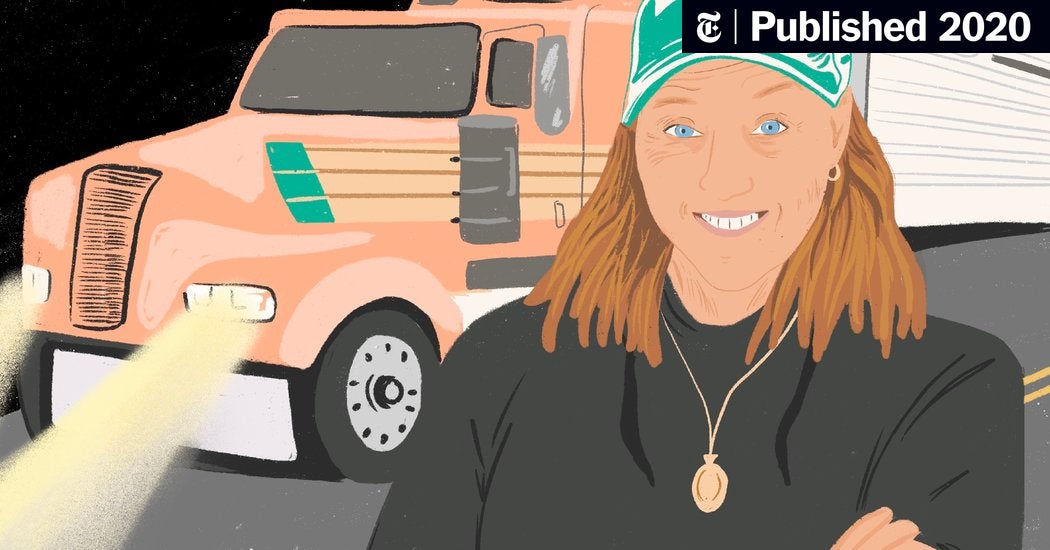
“We’re heading into this without any protection.”
— Ingrid Brown, truck driver
[This profile is part of a series highlighting women leading the fight against coronavirus. Sign up here for future profiles. This week’s feature is a collaboration between The New York Times and The Fuller Project.]
Ingrid Brown finds solace in nighttime driving, especially now. As the sun dips below the horizon, she and her truck light up the empty highways before her, enjoying the quiet as a refreshing escape.
Rather than staying home in North Carolina, Brown, a 58-year-old trucker and grandmother of six, is traversing the country in an 80,000-pound rig loaded with fresh produce. Over the last two months, as the country faces the pandemic, she has delivered essentials like fruits, vegetables, eggs, and dairy across various states, including Missouri, Florida, and New York.
Among the 3.5 million truck drivers in the U.S., with over 200,000 being women, Brown plays a vital role in keeping the nation stocked during this crisis.
Currently, Brown finds herself driving without adequate protective gear, struggling to locate masks or disinfectants. While some major trucking firms provide supplies, many drivers must fend for themselves.
“We’re heading into this without any protection,” she remarked during a phone call from Missouri. “It feels like we are running through a fire in gasoline pants. Drivers have no safety measures.” With regular interactions across the country, she is aware of the potential risk she poses to others.
Brown is also concerned about falling ill far from home. Her ongoing battle with melanoma skin cancer increases her vulnerability to the virus. After undergoing surgery recently, she continues to deliver produce, refusing to let her condition hinder her passion for trucking.
“America operates through trucks,” she asserts. The pandemic can’t keep drivers like her from working. With huge implications for the industry, truckers are essential to transporting goods nationwide.
Brown has been in the trucking industry for 40 years, using her downtime to connect with her grandchildren over FaceTime and advocate for improved working conditions for truckers.
There’s a significant shortage of drivers, despite a reported 68% increase in female truckers from 2010 to 2018. Trucking remains a challenging profession, often keeping drivers away from their families for extended periods under tough conditions.
As a founding member of the nonprofit Women in Trucking, she promotes safety initiatives and aims to improve the work environment in a male-dominated industry. This isn’t her first crisis—she previously helped deliver supplies during natural disasters, but facing an invisible threat like the coronavirus adds an entirely new layer of complexity.
With changing shipping demands, logistics have become unpredictable as various establishments close. While delivering cabbage in New York, she found a shortage in supply and humorously remarked on the city’s appetite for it.
Finding meals and necessities while on the road has become increasingly difficult, with many restaurants shut down. Truck stops are running low on supplies, and securing parking can also pose a challenge.
Recently at a truck stop named after her, Brown had a heartwarming encounter when a fellow driver generously offered her a small amount of hand sanitizer. Acts of kindness like these are becoming more common, with various organizations stepping in to support truckers during the pandemic.
One hotel even offered free accommodations for truckers seeking respite, but Brown ultimately decided against it, concerned about potentially exposing others to the virus. Prioritizing the safety of others, she understands the importance of self-protection in halting the spread of the virus.
Sophia Jones serves as managing editor for The Fuller Project, focusing on global issues affecting women.
