


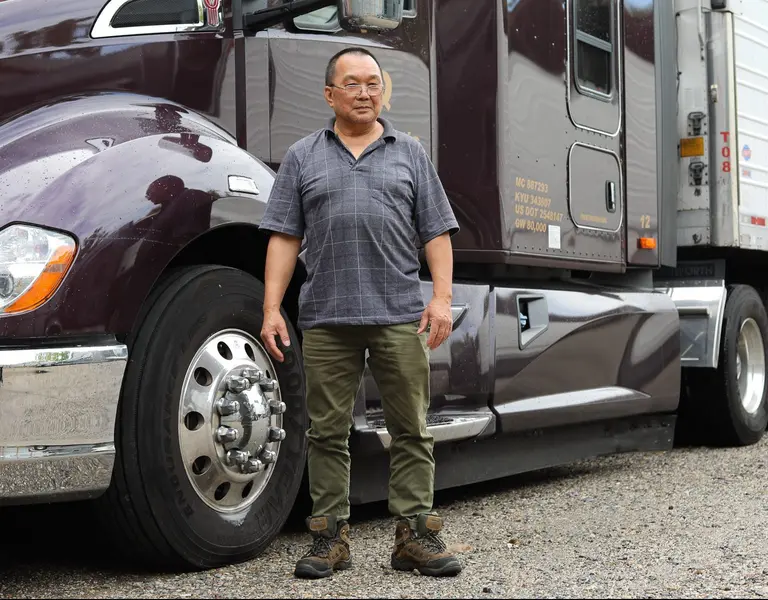
Truck Drivers’ Struggles During the Pandemic
Amid the pandemic, Chinese truck drivers in New York City are facing intense pressure to deliver essential goods on time, often working beyond their 11-hour driving limits. One of these drivers, Tom Tang, is preparing for a lengthy 15-hour trip to Saint Louis, with his truck loaded up in a bustling Brooklyn warehouse.
Background and Mental Health Impact
Tang emigrated from Canton, China, at the age of 15 and started his trucking career after graduating high school. He typically works between fifty to sixty hours each week, which takes a toll on his mental health. “Mondays are the toughest. We drive long hours and barely get enough sleep,” Tang shared in Cantonese.
Risks and Financial Pressures
Despite his extensive experience, Tang worries about accidents caused by fatigue. The high-stakes nature of the job adds financial and managerial pressure, pushing drivers to complete deliveries rapidly. During the COVID-19 pandemic, these drivers have frequently overworked to meet urgent demands, leading to mental strain, particularly among immigrant communities like Tang’s.
Health Challenges and Lifestyle
Chee Phang, another Chinese-Malaysian driver, echoed these sentiments, sharing that unhealthy eating habits are a necessary evil of the job. He gained 30 pounds in a year, which raises health concerns, according to Dr. Yan Li, an expert on population health.
Cultural Stigma around Mental Health
The stigma surrounding mental health issues within the Asian community further complicates matters. Many drivers, including Don Wong and Keipo Hui, report struggles with depression stemming from job isolation and relationship strains. Hui expressed the emotional weight of missed family moments due to his work.
Accessibility of Mental Health Services
Mental health services are sparse in major Asian languages in New York City, making it challenging for non-English-speaking immigrants to access help. The high cost of health insurance exacerbates these challenges, as many drivers like Tang and Phang find coverage unaffordable. This financial strain contributes to their inability to seek necessary medical care.
Call for Change
Experts highlight that improving mental health resources and reducing stigma in the Chinese immigrant trucking community is essential for their well-being. “To tackle stigma, conversations within the community must begin,” urged epidemiologist Sandro Galea. Addressing these issues requires a multifaceted approach beyond just better healthcare coverage.
