
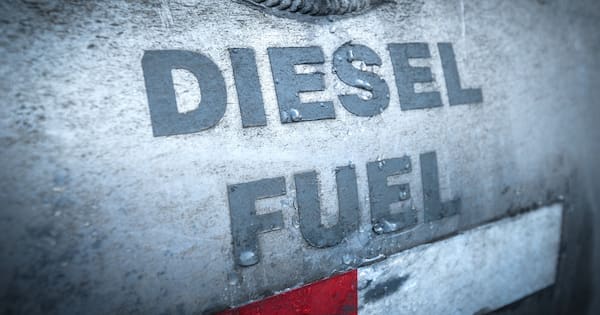
The Government is set to ease certain trucking and freight regulations as a measure to decrease fuel consumption amid ongoing conflicts in the Middle East impacting global energy supply.
Regulation Minister David Seymour revealed that modifications to existing rules “to eliminate or suspend regulatory barriers” are in the pipeline as the Government gears up for a potential shift to the second phase of its fuel response plan.
Among the proposed adjustments are permits for some heavy vehicles to carry increased loads per journey, modifications to restrictions for oversized trucks, and harmonizing licensing requirements to ensure drivers of heavier electric vehicles are not required to hold a higher-class license than those operating diesel trucks.
Seymour emphasized that the Government has been attentive to the concerns of individuals affected by fuel uncertainty and noted that these changes would be beneficial in higher response levels. He stated, “New Zealand’s fuel supply is stable. We’re committed to maintaining that stability.” He added, “We don’t want a repeat of the Covid-19 lockdowns, and our efforts to enhance fuel efficiency now will help sustain phase one for as long as possible, minimizing disruption to New Zealanders.”
Currently, New Zealand is in phase one, which entails heightened monitoring but lacks emergency measures. The Government is preparing various options to be swiftly enacted should the country advance phases, aiming to have these ready by the month’s end if necessary.
Transport Minister Chris Bishop acknowledged that concerns regarding truck weight restrictions, known as the Vehicle Dimensions and Mass rule, have continually surfaced from the freight sector. He mentioned that “even slight increases in allowed loads could decrease the number of trips needed, saving time, lowering costs, and reducing fuel usage.” However, he also pointed out the need to balance productivity improvements with safety and network impacts.
Additional considerations include temporarily lifting delivery curfews that limit truck travel in populated areas during certain hours, which could lead to better fuel efficiency. The government is also reviewing route restrictions for oversized vehicles, as well as the licensing thresholds for zero-emission vehicles to encourage broader adoption within the commercial fleet while addressing current fuel supply concerns.
